Dean Michael Stamos, MD (Since 2017)
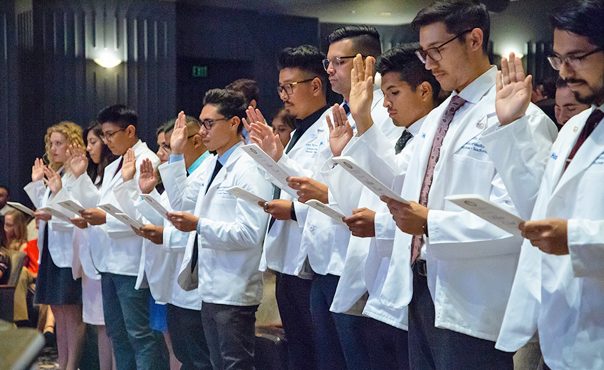
Ranked as one of the top 50 U.S. medical schools for research by U.S. News & World Report, the the UCI School of Medicine is dedicated to advancing medical knowledge and clinical practice through scholarly research, physician education and high-quality care. The medical school nurtures the development of medical students, resident physicians and scholars in the clinical and basic sciences and supports the dissemination of research advances for the benefit of society.
Dean Mark Lazenby, PhD, APRN, FAAN (Since 2021)
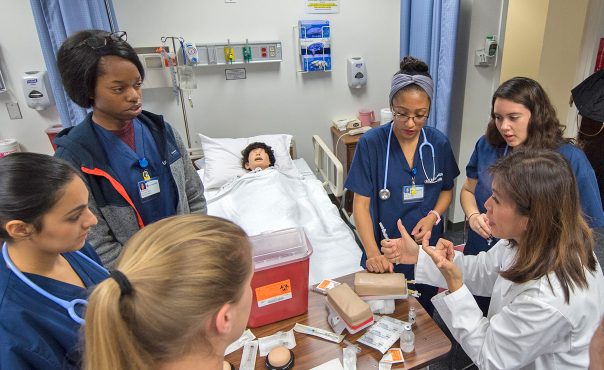
The UCI Sue & Bill Gross School of Nursing is dedicated to the education of nursing professionals who will improve patient care and promote population health, locally and globally. The school strives to produce leaders in research, education and clinical practice who will champion collaborative, compassionate and interdisciplinary evidence-based practice.
Dean Jan Hirsch, BS Pharm, PhD (Since 2019)
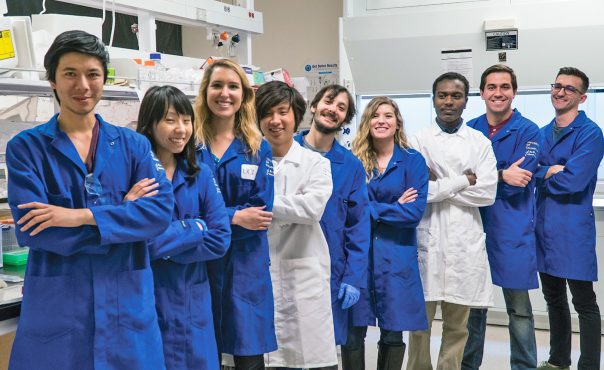
The school offers undergraduate and graduate students unparalleled training for future careers in pharmacy, medicine and biomedical research. The innovative, rigorous curriculum integrates concepts from biology, chemistry, chemical engineering, pharmacology and physiology. Alumni pursue exciting professional opportunities that improve our society’s health and well-being.
Dean Bernadette Boden-Albala, MPH, DrPH (Since 2019)
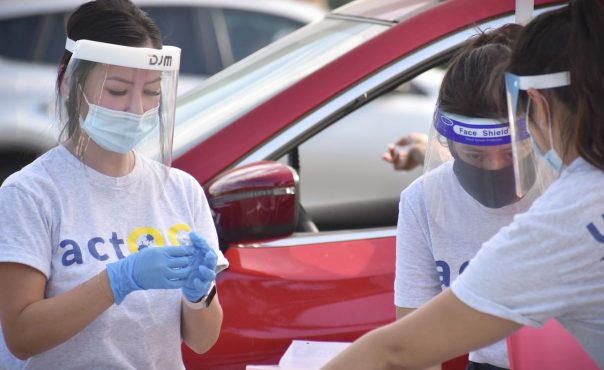
The mission of the public health program at the University of California, Irvine is to create, integrate and disseminate population and community-based knowledge to promote health and reduce the societal burden of human disease and disability through excellence in research, education and public service.

Associate Vice Chancellor and Executive Director Shaista Malik, MD, PhD, MPH (Since 2017)
The institute provides the best scientific research, education and clinical care integrating conventional and complementary medicine. The institute’s vision is to be the preeminent national and international academic institute for pioneering multidisciplinary research, education and health care practices for the care of the whole person. Learn more about what is whole-person health.

“We are very excited for the UCI College of Health Sciences to become a national model for integrative health. We believe this model will eventually become the standard approach for promoting health and well-being in our society.”
2021-22 College Annual Report

Historical Timeline
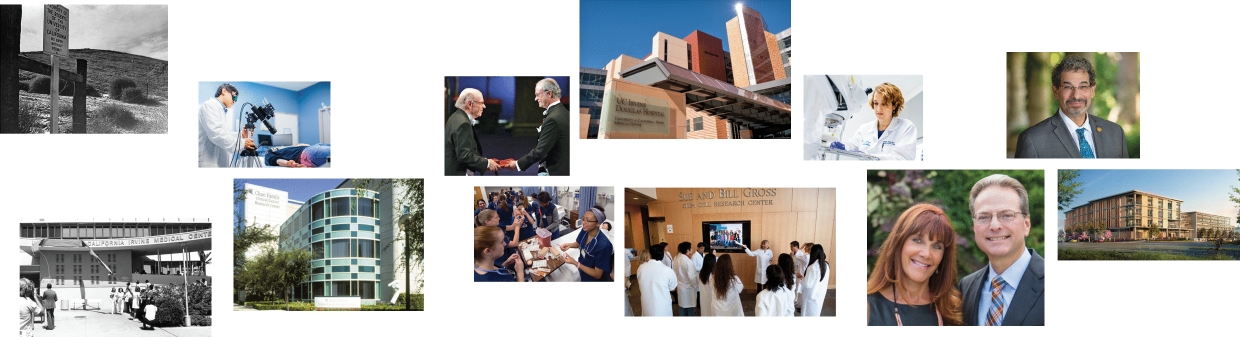
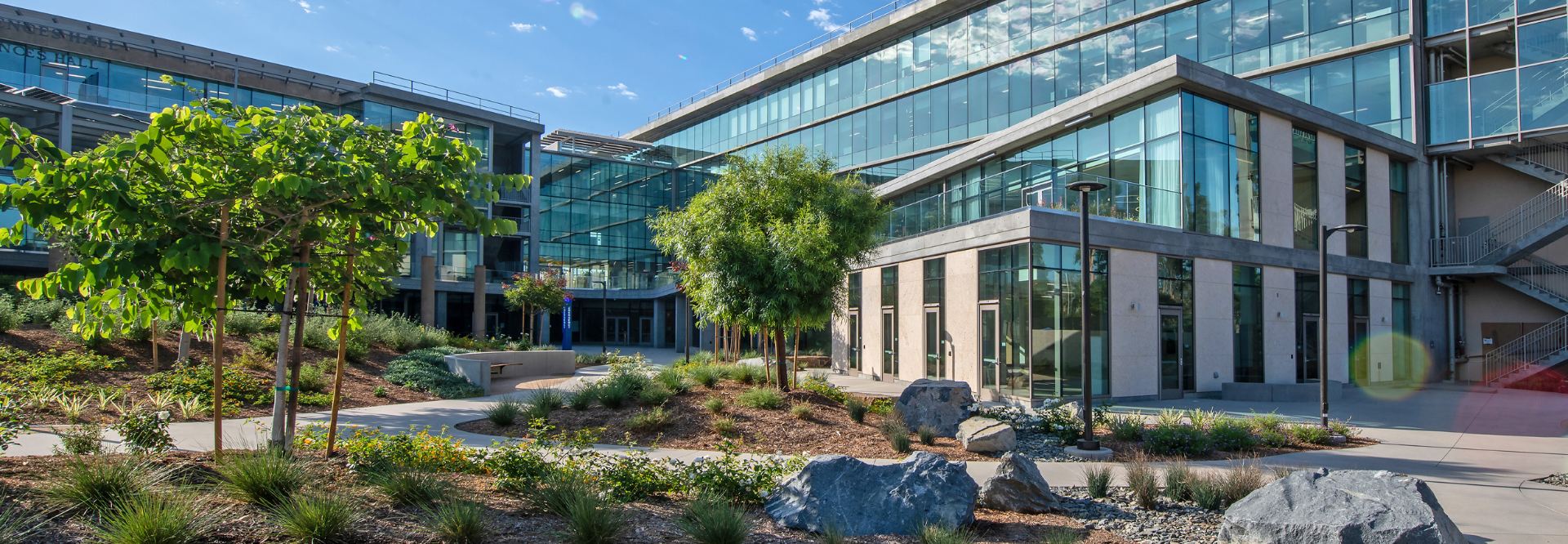
Much has changed from the early days when the medical school came to campus and a medical center was acquired, to today’s Susan & Henry Samueli College of Health Sciences with its world-class programs and facilities. What remains the same is our dedication to train new generations of physicians and nurses, conduct breakthrough research and provide the finest patient care.